During the 2021–2025 Sustainability Roadmap period, Monde Nissin implemented site-level operational initiatives to address waste generation and food loss, influenced by production volumes, material handling, packaging formats, and the availability of local recovery infrastructure.
Across the roadmap period, manufacturing sites continued refining segregation practices to improve recovery rates and reduce landfill disposal. Standardization of Materials Recovery Facilities (MRFs) was implemented across plants to strengthen sorting accuracy, improve material classification at source, and reinforce segregation discipline within production areas. Zero Waste-to-Landfill initiatives were supported by closer coordination with accredited recovery partners, improving material classification at source, and reinforcing segregation discipline within production areas.
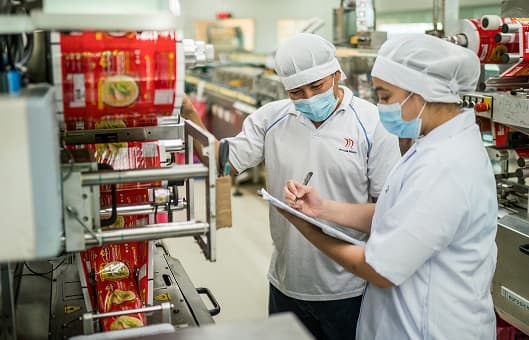
Food loss reduction efforts were implemented alongside these measures. Sites tightened production planning controls, improved handling during processing, and adjusted quality checks to reduce avoidable rejects. Where feasible, food waste was redirected for recovery for use as biomass fuel to minimize disposal.
Packaging specifications were also integrated into waste management considerations in 2025. Selected product lines underwent material optimization to reduce packaging thickness and improve recyclability without compromising product integrity. Implementation was carried out within existing operational constraints, recognizing differences in waste composition, recovery capacity, and infrastructure across sites.
Most manufacturing waste continued to be diverted from landfill through recycling and recovery channels. Waste diversion performance varied by site, reflecting local recovery capacity and operational conditions. Food loss reduction measures contributed to lower volumes of avoidable waste in selected processes, though results were influenced by production volumes and changes in product mix during the year.
Experience in 2025 reinforced that landfill diversion outcomes depend on consistent segregation discipline and the reliability of external recovery partners. Food loss reduction proved most effective when addressed at source through production planning and quality controls rather than relying solely on downstream recovery.
The year also highlighted the importance of integrating packaging design decisions with waste management considerations to support material efficiency and circularity objectives. These insights inform refinements to waste monitoring, production review practices, and packaging evaluation processes.